Boat manufacturing isn’t one job. On any given day, crews may move between sanding fiberglass, spraying paint or gelcoat, handling resin, assembling finished components, or cleaning equipment. Each task brings different hazards, different working conditions, and different protective clothing needs.
Because of that, choosing disposable coveralls isn’t as simple as finding one garment that works well enough for every application. While using the same coverall across the entire facility may seem like the easiest option, it doesn’t always match the work being done. A worker sanding fiberglass doesn’t face the same hazards as someone spraying gelcoat or handling resin, yet it’s common for one coverall to be expected to do it all.
It’s easy to understand why. Standardizing on one garment simplifies purchasing, inventory, and day-to-day operations. But that convenience can come with tradeoffs. Workers performing lower-risk tasks may wear more protection than they need, which can add unnecessary heat and cost. At the same time, workers in higher-exposure applications may require a different level of protection.
Matching protective clothing to the task helps create a more balanced approach. Instead of choosing one disposable coverall for every job, facilities can select garments based on the hazards workers actually face. That can improve worker comfort, provide more appropriate protection, and help make better use of PPE across the facility.
Matching Protective Clothing to Common Boat Manufacturing Tasks
The best place to start is by looking at the work being performed. Different tasks create different hazards, so they don’t all require the same level of protection. Choosing protective clothing based on the application helps workers wear protection that’s appropriate for the job without adding unnecessary heat or cost.
Paint Spraying & Gelcoat
Paint spraying and gelcoat application often involve overspray, long hours, and warm working conditions. In these environments, comfort is just as important as protection. Garments designed with both in mind help workers stay comfortable throughout the shift while providing protection where it’s needed. MicroMax® NS Cool Suit is designed for these applications, combining a breathable SMS back panel with a microporous front and sides to help manage heat while maintaining protection in high-exposure areas.
Resin Work & Chemical Splash
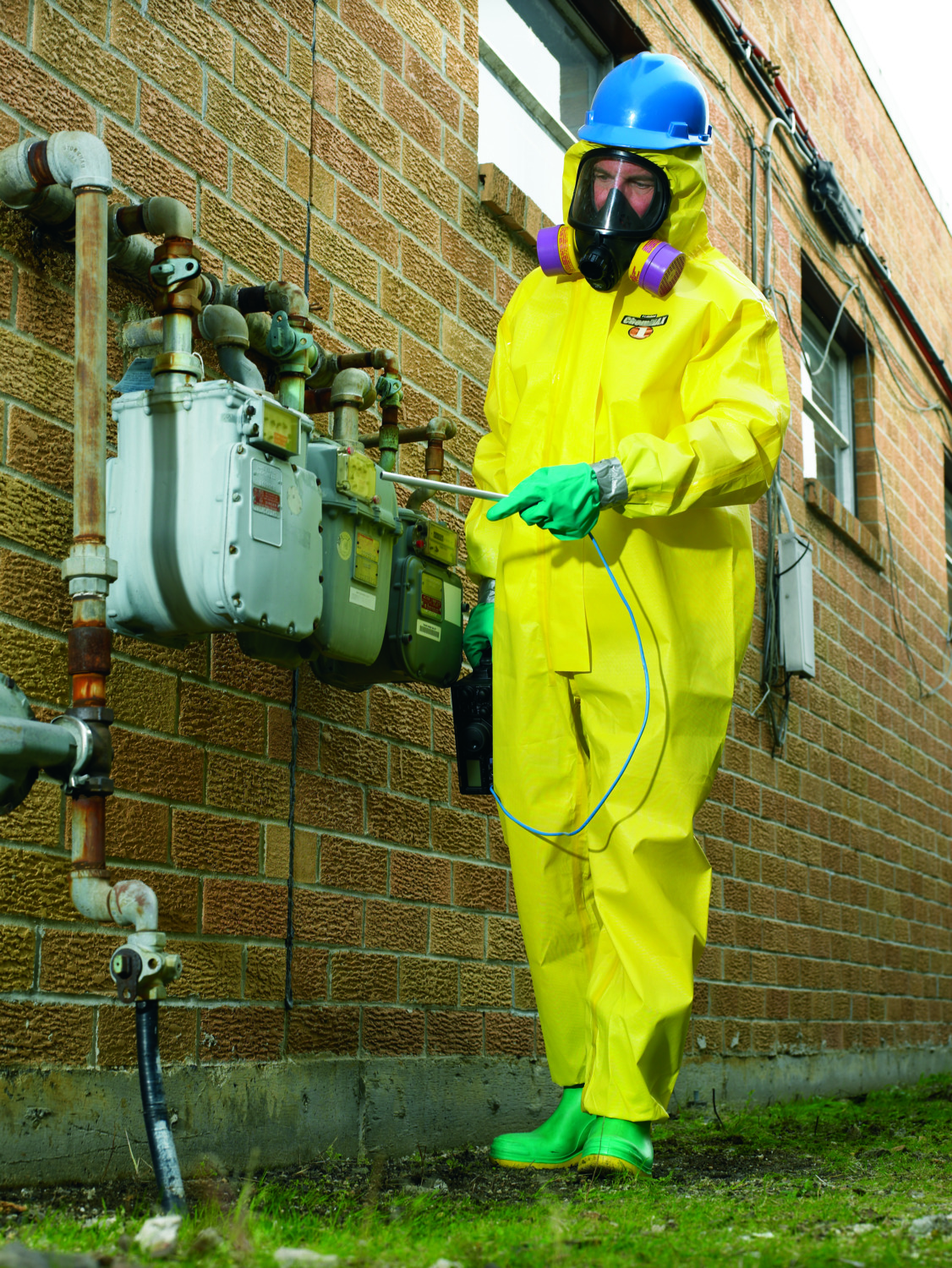
Resin handling and solvent use can present a higher potential for chemical splash than many other boat manufacturing tasks. These applications typically call for garments designed to provide a higher level of barrier protection.
For these types of jobs, MicroMax® NS Global and ChemMax® 1 offer options for applications where stronger chemical protection may be needed, depending on the materials being handled and the level of exposure.
Sanding, Finishing & General Production
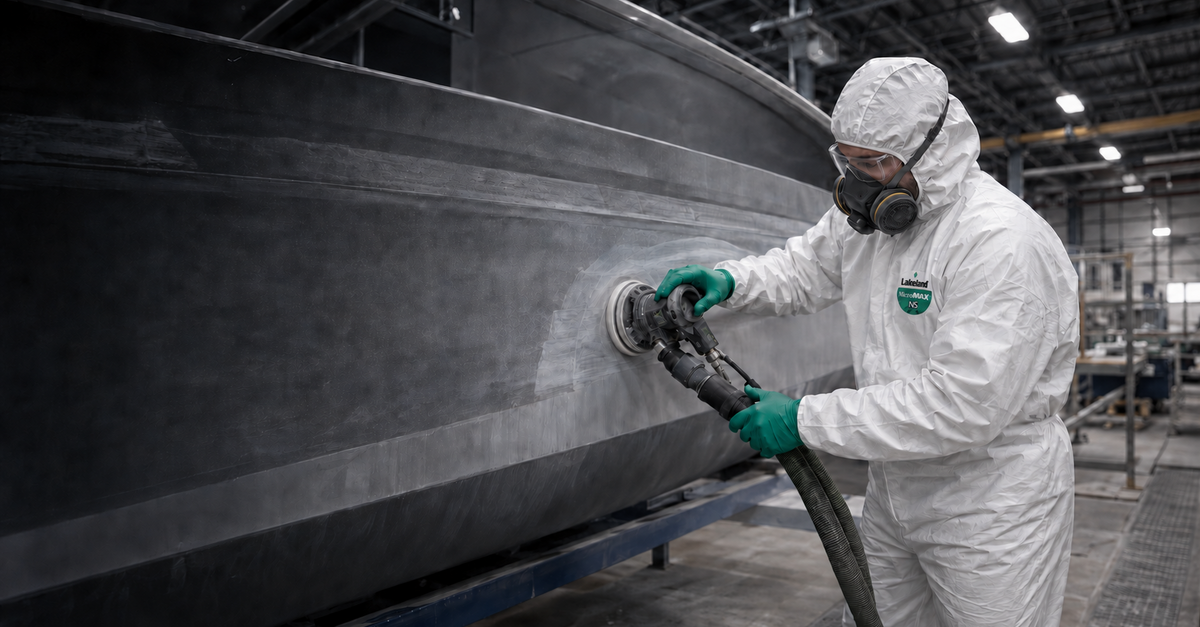
Sanding fiberglass, preparing surfaces, and other general production work often create dust, dirt, and debris rather than liquid chemical exposure. For these tasks, a lighter protective garment may be a more practical choice.
MicroMax® NS ANSI is designed for general production environments where protection from particles is needed without the higher level of barrier protection required for chemical handling.
Assembly & Targeted Protection
Not every task requires a full-body disposable coverall. Dry assembly work and certain finishing tasks may be better suited to lighter protection, while some jobs only require coverage for specific areas of the body.
For dry, non-hazardous work, SafeGard® provides an lightweight coverage for general production and assembly tasks. When only partial protection is needed, MicroMax® NS —including aprons, sleeves, and boot covers—can help protect workers without requiring a full coverall.
Comfort Can Support Consistent PPE Use
Protective clothing is only effective when workers wear it correctly and consistently. If a garment feels unnecessarily hot or bulky for the task, it can become one more challenge during an already demanding shift.
Matching protective clothing to the application can help improve comfort while still providing the level of protection the job requires. For example, the needs of a worker spraying gelcoat in a warm environment may be different from someone performing dry assembly or sanding fiberglass.
When workers have PPE that’s appropriate for both the hazards they face and the conditions they work in, they’re more likely to keep it on throughout the job. That can support more consistent PPE use while helping crews stay focused on their work.
Task-Based Selection Can Help Control PPE Costs
A task-based approach can also help facilities make better use of their PPE budget. Using the same garment for every application may mean paying for barrier protection on jobs that do not require it. Evaluating each task individually helps facilities balance protection, comfort, and cost across the production floor.
Questions to Ask Before Choosing Protective Clothing
No two boat manufacturing facilities are exactly alike, and neither are the tasks performed within them. Before selecting a disposable coverall, it’s helpful to consider a few key questions:
- What task is being performed?
- What hazards are present?
- Is there potential for chemical splash or exposure to resins or solvents?
- Will workers be wearing the garment for an extended period?
- Does the task require full-body or partial protection?
Answering these questions can help narrow down the type of protective clothing that’s appropriate for the application and create a more consistent approach to PPE selection across the facility.
Find the Right Garment for the Job
Choosing protective clothing does not have to be guesswork. Visit Lakeland’s Marine & Boat Manufacturing Resource Page to explore the Marine & Boat Manufacturing Garment Guide, compare garments by application, and access additional resources for common boat manufacturing tasks.
Still not sure which garment fits your process? Tell us about the work being performed, the hazards involved, and the conditions your crew faces. Our team can help identify an appropriate option, and qualified organizations may be eligible for a product evaluation sample.