Protective clothing buyers need to know more than where a garment was made. They need confidence that the factory can control materials, repeat approved production processes, meet specialized requirements, and provide the documentation needed to support the product.
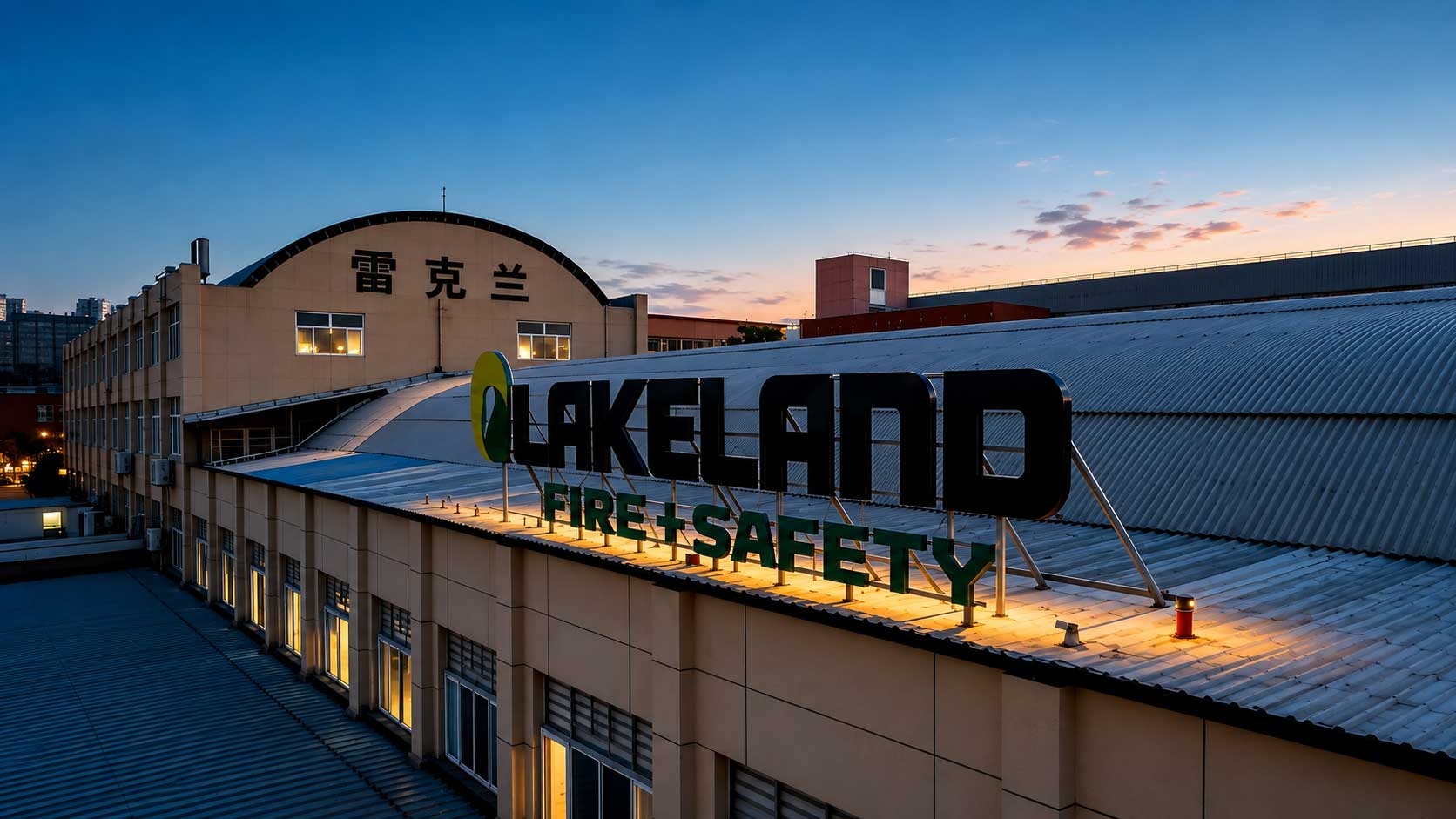
At Lakeland’s Weifang facility, recognized standards, independent assessments, and internal operating systems put that structure into practice. Together, they demonstrate the operational discipline and specialized capabilities behind Lakeland’s protective clothing.
Building Consistency Into the Production Process
Protective clothing must meet the same requirements from one production run to the next. At Weifang, ISO 9001 and Module D provide the structure and independent oversight needed to keep materials, processes, testing, and quality control consistent.
ISO 9001 Establishes a Repeatable Quality Framework
Consistent protective clothing production starts with clearly defined, repeatable processes.
ISO 9001 requires organizations to define how work is performed, assign responsibilities, maintain records, monitor results, and address problems when they occur. The goal is to create a quality management system that can consistently meet customer requirements and improve over time.
Weifang’s ISO 9001:2015 certification covers the design, development, and production of flame-resistant coveralls and nonwoven protective clothing.
The value lies in the structure behind the product. Materials, production activities, inspections, records, and corrective actions follow established processes. This gives buyers a clearer basis for evaluating the facility and helps distributors answer customer questions about how Lakeland manages product quality.
Module D Adds Ongoing Oversight of PPE Production
Testing and approving a PPE design is only one part of conformity. The manufacturer must also show that it can continue producing the approved design under controlled conditions.
Under the European PPE Regulation, Module D requires manufacturers to maintain an approved quality system for production, with ongoing assessment by a notified body.
Weifang is listed as an approved production site under Lakeland’s European CE and UKCA Module D certificates. The certificates’ scope includes heat-and-flame, welding, arc, firefighter, and chemical protective clothing.
The assessment follows the production controls behind covered products, including incoming materials, manufacturing procedures, testing, and quality activities. The product does not rely solely on a one-time test result. The process used to manufacture it remains subject to independent oversight.
That strengthens the documentation behind covered CE and UKCA marked PPE and provides greater visibility into how Lakeland maintains conformity after a product enters production.
These systems establish the foundation for repeatable production. Some protective-clothing applications, however, require additional controls because the manufacturing environment, documentation, or material assembly can directly affect how the garment performs and where it can be used.
Supporting Specialized Protective-Clothing Markets
Cleanroom, medical, and fire-service garments bring requirements that go beyond general quality management. At Weifang, ISO 14644 and ISO 13485 address the specialized conditions, documentation, and material controls these products require.
ISO 14644 Addresses Cleanroom Conditions
Garments used in semiconductor, pharmaceutical, laboratory, and other controlled environments must do more than protect the wearer. They must also help prevent particles and other contaminants from entering a sensitive workspace.
The ISO 14644 family covers cleanrooms and associated controlled environments. ISO 14644-1 classifies air cleanliness according to the concentration of airborne particles, while other parts address areas such as testing, monitoring, construction, and cleanroom operation.
Lakeland applies ISO 14644 requirements to the controlled conditions supporting cleanroom production at Weifang. That work involves more than garment construction. The production area, equipment, cleaning procedures, employee practices, and environmental controls can all affect contamination performance.
Those controls ensure cleanroom garments are produced under conditions designed for contamination-sensitive applications.
ISO 13485 Supports Medical-Use Protective Clothing
Medical-use protective clothing brings added expectations for documentation, production control, traceability, and regulatory compliance.
ISO 13485 establishes quality management requirements specifically for organizations involved in the design and manufacture of medical devices and related products.
Weifang’s ISO 13485:2016 certificate covers the design and production of single-use protective clothing for medical personnel.
The certification provides documented evidence that the facility operates a quality system designed for medical applications. It also demonstrates that Weifang can support products and markets that require controls beyond those used for general industrial garments.
Managing the Factory Responsibly
A responsible factory must control more than the product itself. Weifang’s environmental, occupational safety, and social-compliance systems show how the facility manages the people, practices, and conditions behind production.
ISO 14001 Creates a Formal Environmental Management Process
Environmental performance requires more than a broad sustainability statement. A manufacturing facility needs a method for identifying environmental impacts, assigning controls, setting objectives, and monitoring progress.
ISO 14001 provides that framework. Weifang’s ISO 14001:2015 certification covers protective-clothing production and related management activities.
The certification provides documented evidence that environmental responsibilities are managed through a formal system. It places issues such as resource use, waste, compliance obligations, and environmental performance within an ongoing management process.
ISO 45001 Supports a Safer Workplace
Lakeland manufactures clothing intended to protect people working in hazardous environments. That same focus on protection extends to the people making those products.
ISO 45001 establishes requirements for an occupational health and safety management system. It provides a framework for identifying hazards, managing risks, involving workers, monitoring performance, and improving workplace safety.
Weifang’s ISO 45001:2018 certification applies to protective-clothing production and related management activities.
The certification shows that worker safety is built into how the facility is managed. It also reinforces a broader point: product quality, workplace safety, environmental management, and production control all support a well-run manufacturing operation.
FIFO Supports Orderly Material Control
Not every important factory control comes with a certificate. Weifang’s FIFO inventory process is a straightforward example of how routine warehouse practices support material control before production begins.
Weifang uses a first-in, first-out inventory process, commonly called FIFO. Earlier material receipts move into production before newer stock whenever applicable.
That discipline helps prevent older materials from sitting unused while newer shipments move ahead of them. It also supports more orderly inventory rotation, storage management, and material traceability before production begins.
On its own, FIFO is a simple warehouse discipline. Viewed alongside the facility’s certifications and assessments, it helps complete the picture of how Weifang manages quality from incoming materials through finished production.
Why These Systems Matter
No single certification defines Weifang. The strength of the facility comes from how its standards, independent assessments, and internal controls work together.
They give distributors stronger support when customers ask how Lakeland controls production. They give PPE buyers clearer documentation when evaluating the facility for medical, cleanroom, industrial, or fire-service products. They also show that worker safety, environmental responsibility, and material control are part of how the factory operates.
The result is a facility built to support more than production volume. It gives Lakeland the systems and specialized capabilities needed to manufacture protective clothing for markets where the details behind the garment matter.