Introduction
When healthcare workers are treating patients with Ebola, PPE becomes more than just another layer of protection. It becomes a critical barrier between the worker and a potentially life-threatening exposure.
Because Ebola is transmitted through direct contact with infected body fluids, selecting the right protective clothing is an important part of reducing exposure risk. In these environments, PPE is often the primary line of defense, making garment selection a critical consideration for healthcare organizations, emergency response teams, and other personnel working around infectious disease hazards.
When evaluating protective clothing, certifications and fabric performance are often the starting point. While both are important, they do not provide a complete picture of overall garment performance. Factors such as seam construction, liquid protection, inward leakage, and how the garment integrates with other PPE can all influence the level of protection a garment provides.
Effective PPE selection requires a broader evaluation of the garment as a whole. Looking beyond the certification label can help organizations make more informed decisions when selecting protective clothing for Ebola protection and similar infectious disease environments.
Key Takeaways
When evaluating PPE for Ebola protection, it is important to consider more than infectious disease certification alone.
- EN 14126 evaluates fabric performance against infectious agents but does not address garment construction.
- Garment construction matters because seams and closures can affect overall garment integrity.
- Sealed seams are critical for reducing the potential for liquid penetration and inward leakage.
- Lakeland recommends EN 14605 Type 4 protection for Ebola-related hazards due to the potential for exposure to contaminated body fluids.
- PPE should be evaluated as a complete system, including garments, gloves, boots, masks, and proper donning and doffing procedures.
Why Certification Alone Is Not Enough
Certification is often one of the first things buyers and specifiers consider when assessing protective clothing for infectious disease hazards. Standards provide an important benchmark for performance and help ensure garments meet established requirements.
For Ebola protection, one of the most commonly referenced standards is EN 14126. The standard includes testing designed to evaluate a fabric’s ability to act as a barrier against infectious agents carried by contaminated liquids, aerosols, and other materials.
However, EN 14126 evaluates fabric performance, not garment construction.
That distinction is important because a garment is more than just the material it is made from. Seams, closures, and other design features can all influence how effectively the finished garment performs in use.
A fabric may perform well in laboratory testing, but the overall level of protection can still be affected by factors such as seam construction, liquid penetration, and inward leakage. For this reason, certification should be viewed as the starting point rather than the final step in the PPE selection process.
Understanding how a garment is constructed is just as important as understanding how the fabric itself performs. That’s why garment construction plays such an important role when evaluating PPE for Ebola protection.
Why Garment Construction Matters
Fabric performance is important, but it is only one component of overall garment performance.
When discussing infectious disease PPE, most conversations focus on fabric performance. While the barrier properties of the fabric are important, garment construction is also a critical consideration when evaluating PPE for Ebola protection.
This is because a garment is more than just a piece of fabric. Seams, closures, and other design features can all influence how effectively the finished garment performs in real-world conditions.
Not All Seams Are Created Equal
One of the most important aspects of garment construction is seam design. Different seam types offer different levels of protection, and not all seams are constructed to provide the same barrier against liquids.
Common seam types include:
- Stitched or serged seams – Commonly found on Type 6 garments. Stitching creates holes through the barrier material that can compromise garment integrity.
- Bound seams – An improvement over standard stitched seams, but they still rely on stitching and therefore still contain stitch holes through the barrier material.
- Stitched and taped seams – Required for Type 4 garments. Taping seals the stitch holes and helps maintain the integrity of the protective barrier.
According to the guide, standard stitched seams can create as many as 14 holes per linear inch through the barrier material. The stitching process can also introduce gaps between pieces of fabric and add thread that may act as a pathway for liquid penetration.
For Ebola protection, this becomes an important consideration. If a fabric has been tested and shown to provide a barrier against infectious agents, it makes little sense to use a construction method that may compromise that barrier elsewhere in the garment.
This is why Lakeland places such a strong emphasis on sealed seam construction. The goal is to maintain the integrity of the garment as a whole rather than focusing solely on the performance of the fabric itself.
Why Inward Leakage Matters
Garment construction becomes even more important when considering the potential for inward leakage.
In Ebola response environments, healthcare workers may wear PPE for extended periods in hot and humid conditions. Perspiration and condensation inside the garment can make it difficult to determine whether contaminated liquids have penetrated the protective barrier.
According to the guide, this creates several challenges. If contamination reaches a worker’s clothing and goes unnoticed, it can increase the risk of exposure during handling, laundering, or even routine contact with contaminated areas of clothing. It can also complicate infection-control procedures, which often assume the inside of the garment remains uncontaminated.
For these reasons, minimizing the potential for liquid penetration is a critical consideration when selecting PPE for Ebola protection. The goal is not simply to meet a certification requirement, but to help reduce the likelihood of contamination reaching the inside of the garment.
This is one of the key reasons Lakeland recommends protective clothing that provides an additional level of protection against liquid exposure.
Why Lakeland Recommends Type 4 Protection
Selecting PPE for Ebola protection involves more than choosing a garment with an infectious disease certification. It also requires considering how the garment is constructed and how it will perform when exposed to liquid hazards.
For this reason, Lakeland recommends garments that meet the requirements of EN 14605 Type 4 for protection against sprays and splashes of hazardous liquids. While some may consider Type 6 garments suitable for infectious disease applications, Lakeland believes Type 4 garments provide a more appropriate level of protection for Ebola-related hazards.
One of the key differences between Type 6 and Type 4 garments is seam construction. Type 6 garments commonly utilize stitched or bound seams, which can introduce openings in the protective barrier. Type 4 garments, however, require sealed seam construction to help maintain garment integrity and reduce the potential for liquid penetration.
The nature of the Type 4 test is also relevant. During testing, liquid is sprayed onto the garment, allowing it to collect in folds, creases, and other areas where penetration is most likely to occur. This creates a more challenging evaluation of the finished garment and its ability to resist liquid exposure.
For Ebola-related hazards, where exposure to contaminated body fluids is a primary concern, Lakeland believes this combination of liquid spray protection and sealed seam construction provides a more appropriate level of protection than relying on fabric performance alone.
Ultimately, Lakeland’s recommendation is based on a simple principle: effective PPE selection should consider the performance of the entire garment, not just the material from which it is made.
PPE Selection in Practice
Selecting the right garment is an important part of Ebola protection, but it is only one piece of the overall PPE system. Protective clothing should be evaluated alongside gloves, boots, masks, and other PPE to ensure the entire ensemble works together effectively. Proper fit, secure closures, sealed interfaces between PPE components, and appropriate donning and doffing procedures all play an important role in maintaining protection.
Lakeland’s product recommendations reflect the principles discussed throughout this article. MicroMAX TS combines a fabric that achieves the highest classifications under EN 14126 with sealed seams and EN 14605 Type 4 certification, helping maintain garment integrity while providing protection against liquid sprays and splashes.
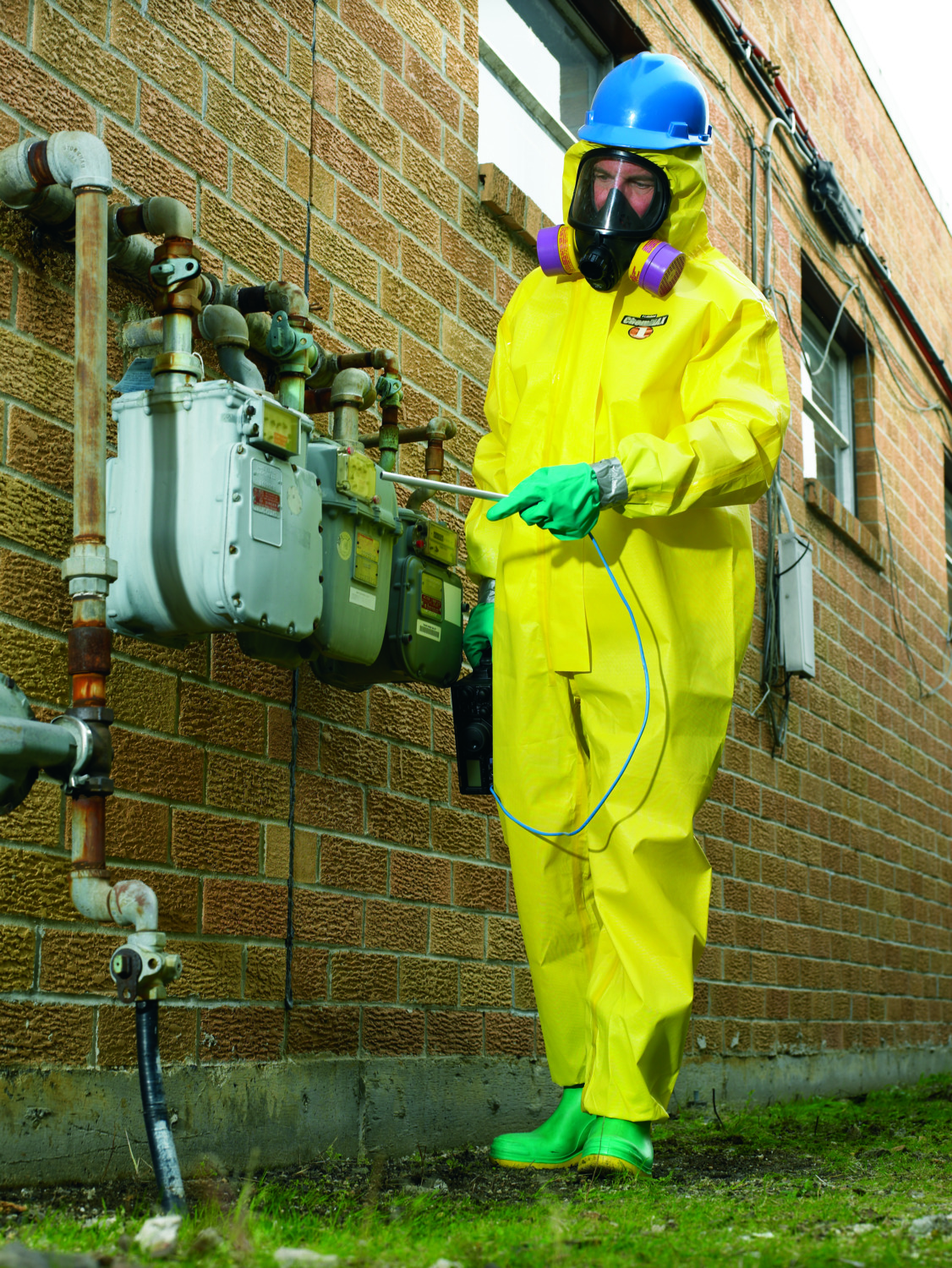
For higher-risk environments, ChemMAX 1 offers sealed seams along with both Type 4 and Type 3 certification. The garment’s solid barrier construction provides an additional level of protection, though this comes with reduced comfort during extended wear.
Both garments are also available in Cool Suit versions, which incorporate a breathable back panel to improve comfort in warmer environments. However, users should understand the limitations of these designs and ensure they are appropriate for the specific hazard and work environment.
Ultimately, PPE selection should always begin with a thorough assessment of the hazard, followed by an evaluation of the complete garment and the broader PPE system.
Conclusion
When evaluating PPE for Ebola protection, certification should be viewed as the starting point rather than the final decision-making factor. While fabric performance remains important, garment construction, seam integrity, liquid protection, and PPE integration can all influence overall performance.
Ebola highlights an important lesson in PPE selection: effective protection depends on more than the fabric alone. By evaluating the complete garment and the entire PPE system, organizations can make more informed decisions and select protective clothing that better aligns with the hazards workers may face.