Would you use a chemical suit designed for liquid splash to protect against a gas?
Of course not. That would be a serious mistake.
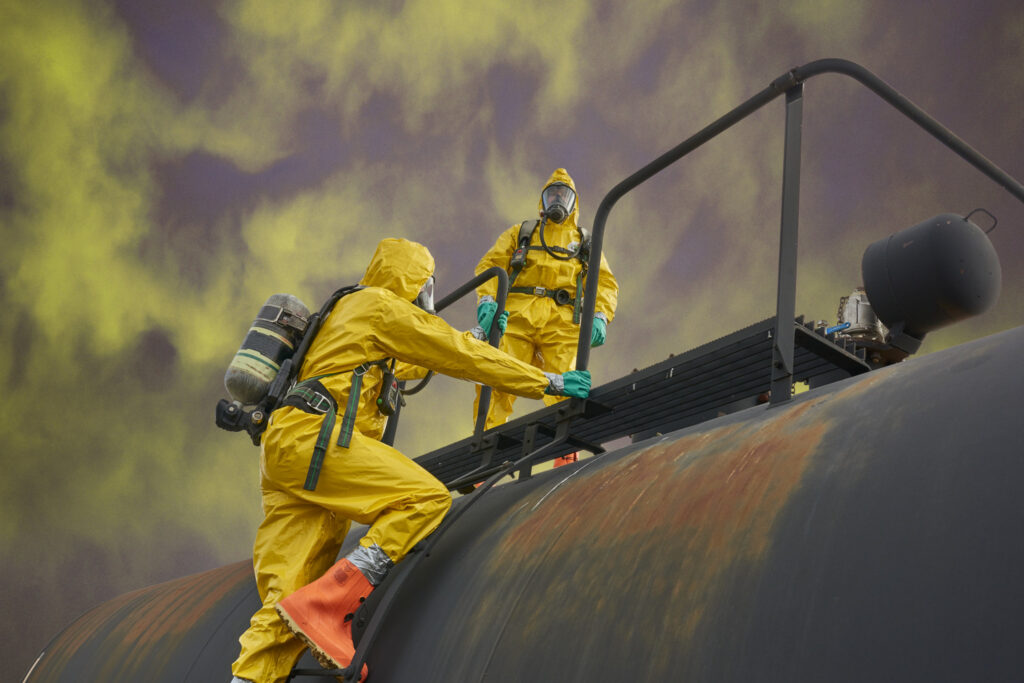
Gases behave very differently from liquids. They move freely, disperse rapidly, and—critically—can be drawn inside a chemical suit through gaps between the suit and other PPE due to the bellows effect. A suit designed for liquid splash protection is not designed to stop gas ingress.
And yet… this risk is often overlooked.
Many users rely on standard chemical suits to protect against liquid hazards without considering a key factor: volatility.
A significant number of chemicals can vaporize at normal temperatures, effectively turning a liquid hazard into a gas exposure risk. Benzene is a well-known example—it readily produces vapor even at room temperature. That familiar smell at the fuel pump? That’s vapor. And while it may seem harmless, benzene is a hazardous substance with well-documented health risks.
Here’s the critical point: A vaporizing chemical does not need a splash or spray to create exposure.
If the substance is exposed to air, it will vaporize—and that vapor behaves like a gas. It can migrate through openings, interfaces, and unsealed junctions between PPE, potentially being drawn inside the suit during movement.
Worse still, many of these exposures are not immediately detectable.
There may be no visible contamination and no immediate symptoms. However, repeated or prolonged exposure can have serious long-term consequences, including damage to cellular DNA and an increased risk of cancer.
When liquid risk becomes gas risk
If you are working with a liquid chemical that can easily vaporize, you are not dealing with a single hazard type—you are managing both liquid and gas exposure risks.
That distinction matters. especially for chemicals that have high toxicity so only small amounts may be harmful.
A standard coverall may provide adequate protection against liquid splash, but it may not be sufficient where vapor exposure is possible—increasingly if interfaces between PPE are not properly sealed.
What should you consider?
At a minimum:
- Ensure all interfaces between PPE (gloves, mask/respirator, boots, suit) are properly sealed.
- Assess the volatility of the chemical, not just its liquid properties.
-
Assess the toxicity of the chemical… are small volumes potentially harmful?
- Evaluate whether your protective clothing is suitable for vapor exposure—not just splash.
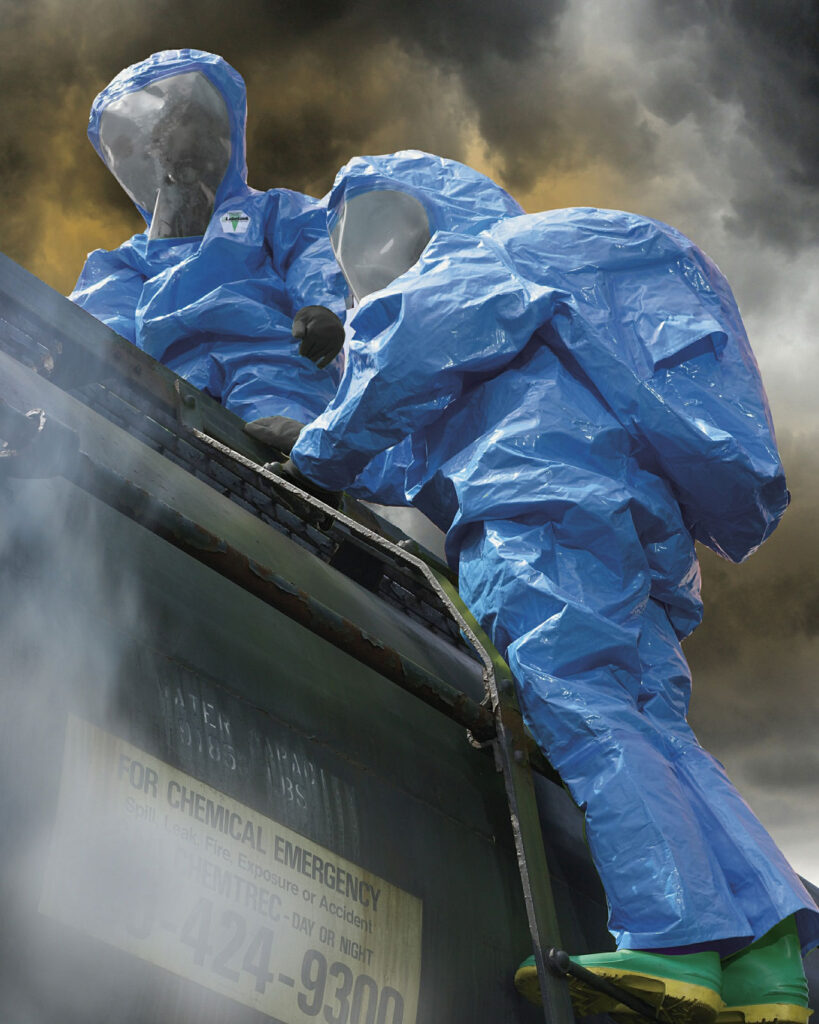
Depending on the substance and the application, a higher level of protection—such as a gas-tight suit—may be required.
The bottom line
If your chemical can vaporize, your risk profile has already changed.
It’s no longer just about liquid protection.
And if your PPE strategy doesn’t reflect that, you may be under-protected without even realizing it.
Not sure whether your current chemical protection is suitable for vapor exposure risks? Contact us today to discuss your application and find the right level of protection for your workforce.