What are sterile cleanroom garments?
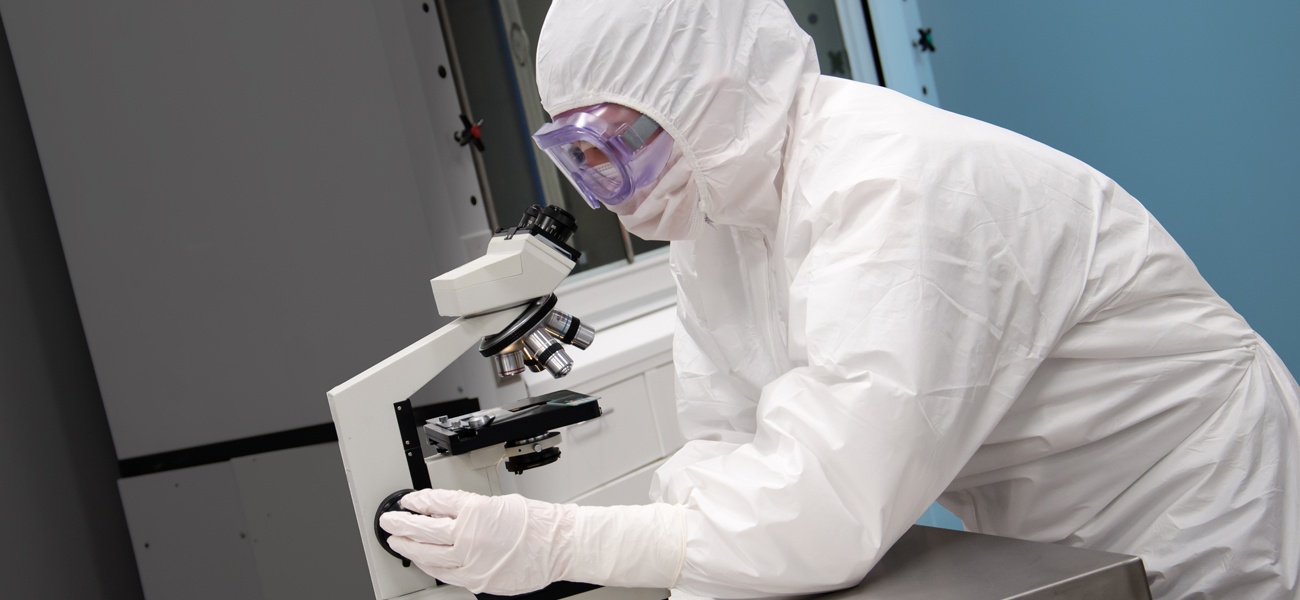
Sterile cleanroom garments are designed to protect a cleanroom environment from contamination by viable organisms, while also protecting the wearer from hazardous substances.
These garments often include coveralls, hoods, sleeves and boot covers, and more to contain human particles within the garment.
Many factors such as air filtration, chemical handling, and liquid condensation can compromise a cleanroom, but the most prevalent threat to a cleanroom is human contamination. Human contamination is sourced from the cleanroom operators and includes particles on the wearer (hair, dead skin, etc.) escaping the cleanroom garment or particles on the garment itself sourced from the manufacturing process.
When choosing sterile cleanroom garments and assessing sterility, it is critical to consider how the apparel is mitigating the transmission of wearer particulates to the cleanroom environment and products.
This is where clean and sterile garments can make a difference.
What’s the difference between sterile garments and clean and sterile garments?
Clean and sterile garments are manufactured in a facility that utilizes current Good Manufacturing Practices (cGMP) and employs competent staff trained in these strict standards. This means that, from the moment raw materials are brought in, the garment is made, sewn, and constructed in a highly controlled clean environment with exacting processes.
Most importantly, a clean manufacturing facility ensures that operators and the garments themselves are not adding particulates onto the garment during construction and production. After production, the garment then undergoes gamma radiation to ensure sterilization.
The Lakeland Standard
Lakeland Industries is proud to go above and beyond the industry standard of clean and sterile garment practices.
All of our CleanMax® garments, both sterile and non-sterile, are clean manufactured to produce a higher-integrity garment. Lakeland Industries manufactures in a certified cleanroom and follows the current Good Manufacturing Practices (cGMP) outlined in the US Code of Federal Regulations 21, Part 820.
This means that with CleanMax®, users of sterile garments can rest assured that the garment is not only sterile but also clean, reducing the possibility of contamination by particles on the garment itself.
We pride ourselves on going the extra mile so you can protect your product and your people.
Lakeland CleanMax® Cleanroom Apparel
Lakeland CleanMax® garments are clean manufactured and available in both sterile and non-sterile configurations.
Ideally suited for ISO Class 4-8 clean environments, our garments are backed by 30 years of experience and dedication to quality manufacturing practices.
CleanMax® was designed with the end-user in mind. All of our clean-manufactured cleanroom garments are latex and silicone free, have bound seams, zipper plackets, and feature tunneled elastic wrist and ankles to reduce particulates from escaping the garment. Each garment is individually packaged with an easy open strip for less handling during the donning process and specially folded to encourage faster and easier donning.
For a full list of features, speak with a Lakeland product specialist, or request a sample to examine the Lakeland difference for yourself.